Residential · 7 min
No Municipal Water? Wells, Septic Systems, and Rural Hookups, Explained
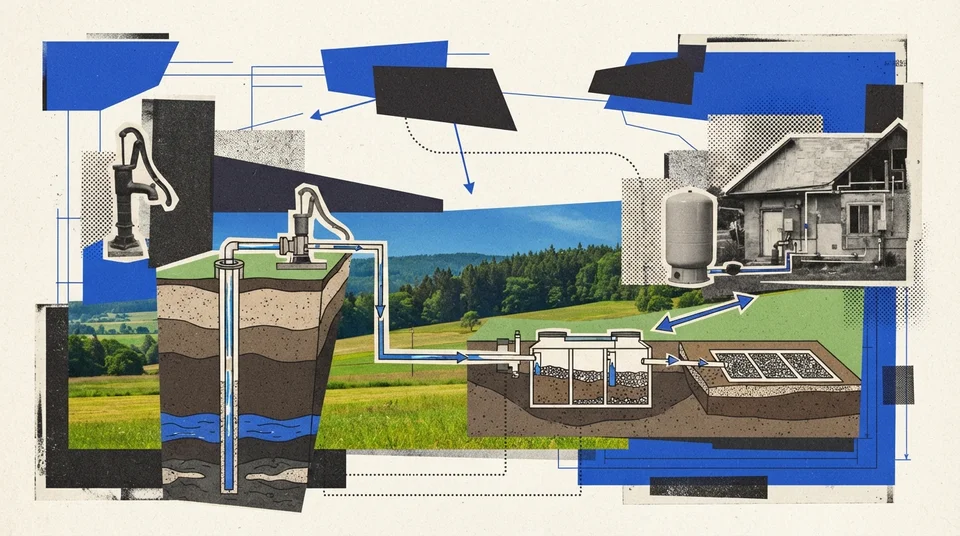
In short — In rural areas, without municipal water or sewer, your modular home draws its drinking water from a well and disposes of wastewater through a septic system and leaching bed. These are full line items — to be budgeted and planned from the start, because they depend on the soil, the lot, and local regulations. This is not a detail: it is part of the project.
Many buyers discover these costs too late. In town, water and sewer run along the street. In rural areas, they get installed on your lot — with their own rules, costs, and lead times.
Water: the well
Without a municipal water supply, drinking water comes from a well. Depending on the region and soil conditions, this may be a shallow surface well or a deeper drilled well. Water quality and flow rate depend on the local water table — which is why a site study matters, and water testing is often required. Costs vary considerably from one lot to the next.
Wastewater: the septic system
Without municipal sewer, wastewater is treated on-site by a septic installation (tank plus leaching bed). In Quebec, these installations are governed by the regulation on wastewater treatment for isolated residences, and their design depends on the soil (percolation test), the slope, and proximity to a waterway. A soil characterization study is generally required.
Worth remembering — The soil determines what type of septic installation is possible — and therefore what it costs. That is one more reason to commission a soil study early. See is your land ready?.
What this means for budget and schedule
| Item | What to allow for |
|---|---|
| Well | Drilling/installation, water testing, pump |
| Septic installation | Soil study, tank, leaching bed, permit |
| Hookups to the home | Supply/drain plumbing, pump electrical |
| Permit | Municipal authorization for the septic installation |
These items are part of the off-factory costs that are often underestimated — see the hidden costs of a modular home and the real cost of a modular home.
Permits and compliance
A septic installation requires municipal authorization and must comply with provincial regulation. This is a component to coordinate alongside the building permit — see building permit in Quebec. The modular home itself connects to these installations the same way any house would.
Sources: Gouvernement du Québec (wastewater from isolated residences), Régie du bâtiment du Québec. Guide written by Jeremy Soares. Last updated: June 26, 2026. Regulations must be verified with the municipality and official sources.

8Module
Modular multi-residential buildings (6 to 24+ units) factory-built in Quebec.
Visit websiteCommercial partnership — we receive compensation. Disclosure
Frequently asked questions
Can a modular home be built without municipal water and sewer?
How much do a well and a septic system cost?
Is a permit required for a septic installation?
Does a modular home connect normally to a well and septic system?
Sources
- Traitement des eaux usées des résidences isolées — Gouvernement du Québec
- Code de construction du Québec — Régie du bâtiment du Québec (RBQ)




Comments
A question or comment on this article? The comments section will be enabled soon.