Commercial · 9 min
Price of a Commercial or Multifamily Modular Building in Quebec
In short — The price of a commercial or multifamily modular building in Quebec does not boil down to a cost per square foot. It is made up of the building as it leaves the factory (the part that benefits from economies of scale) plus the off-factory costs: land, foundation, hookups, transport, soft costs. Comparing two projects means comparing these total costs, not just the factory price.
"How much does it cost?" is a developer's first question. The honest answer starts by refusing the false shortcut of "X dollars per square foot." That number, on its own, misleads — because half the bill is decided somewhere other than the factory.
The big cost blocks
| Item | What it covers | Benefits from the factory? |
|---|---|---|
| Building (modules) out of the factory | Structure, envelope, factory finishes | Yes — economies of scale |
| Land and servicing | Purchase, services, parking | No |
| Foundation and site structural work | Depends on height, soil, basement | No |
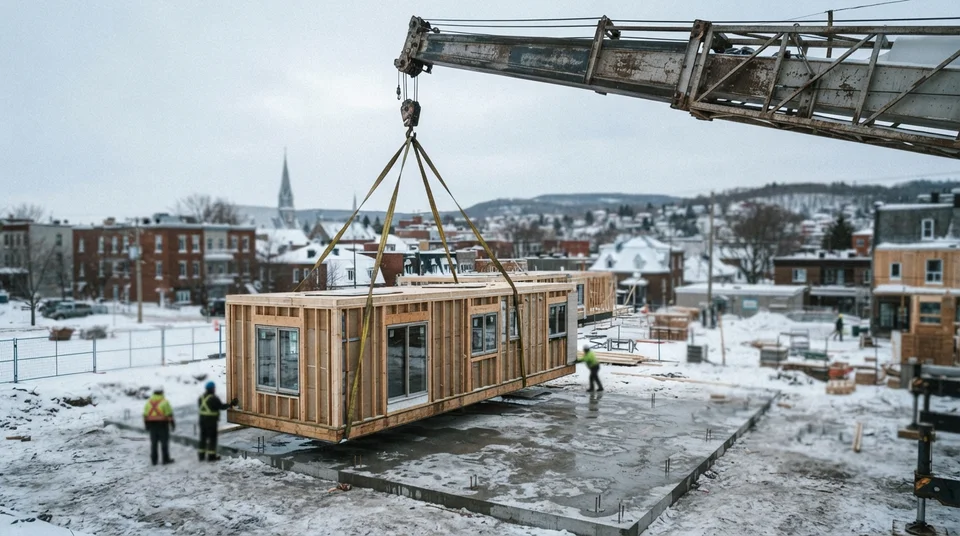
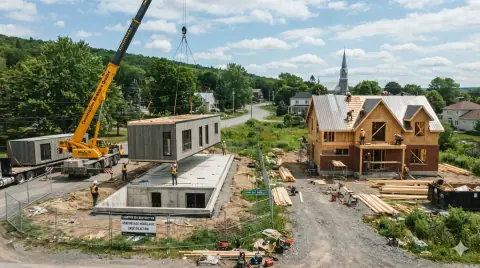
| Transport and lifting | Convoys, crane, urban logistics | No (often underestimated) |
| Soft costs | Design, engineering, permits, financing, fees | No |
The "factory" share is the one that gets cheaper when the project repeats a unit (a dwelling, a room). The more repetition, the more the modular advantage weighs — which is why multifamily is such favourable ground. See the pillar on commercial and multifamily.
What really moves the bill
- The level of finish delivered (closed shell vs ready to occupy).
- Height and the structural system — steel and engineered wood do not have the same cost or the same limits; see wood or steel structure.
- The site: soil, slope, access for convoys and the crane (dense urban settings cost more in logistics).
- Hookups: municipal water/sewer vs well and septic in rural areas.
- The occupancy class: commercial or institutional use carries requirements (fire, accessibility) that weigh on cost.
Worth remembering — Always ask for a quote that separates the factory share from the site costs. Two "per square foot" bids can hide enormous gaps on foundation, transport or finish.
The real calculation: total cost carried over time
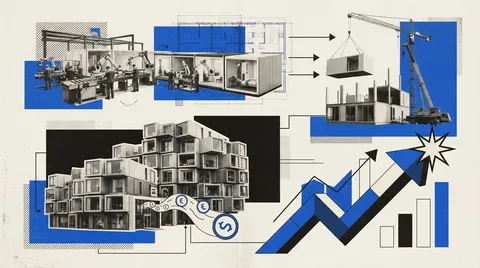
For an investor, price is only half the equation; the other half is the schedule. Modular moves the market launch forward by several months (factory fabrication runs while site work proceeds). Bringing rental revenue forward and cutting the carrying cost of land and financing improves the return — sometimes more than the construction cost gap itself. That is what modular rental building: profitability details, and what the modular vs traditional comparison puts into numbers. In Quebec, manufacturers such as 8Module — specializing in multi-unit housing from 6 to 24 units and beyond — lock in the price at signing, which simplifies pro forma projections from the outset.
Disclosure — 8Module is a commercial client of Modulaire Québec; we receive compensation when we refer a lead. This content remains editorial and independent — 8Module neither commissioned nor reviewed it. Full disclosure.
Comparison mistakes to avoid
- Comparing a factory price to a turnkey cost — you are not comparing the same thing.
- Forgetting transport and lifting, especially in urban settings.
- Ignoring the schedule gain in the pro forma (it is often the most profitable advantage).
- Relying on a single "$/sq ft" without knowing the finish level and the site.
What about residential?
For a single-family home, the pricing logic is the same at a smaller scale — see price of a modular home in Quebec and our calculator on the Pricing page.
Sources: Régie du bâtiment du Québec (Construction Code), CMHC (project financing). Guide written by Jeremy Soares. Last updated: June 25, 2026. All amounts mentioned are indicative and must be validated against real quotes and sourced market data before any decision.

8Module
Modular multi-residential buildings (6 to 24+ units) factory-built in Quebec.
Visit websiteCommercial partnership — we receive compensation. Disclosure
Frequently asked questions
How much does a modular rental building cost per square foot in Quebec?
Is modular cheaper than traditional for a multifamily building?
Which costs are most often underestimated?
Does the price include the land?
Sources
- Code de construction du Québec — Régie du bâtiment du Québec (RBQ)
- Financement de projets de logement — Société canadienne d'hypothèques et de logement (SCHL)


Comments
A question or comment on this article? The comments section will be enabled soon.