Non-profit · 10 min
Housing Co-operatives and Modular Construction in Quebec
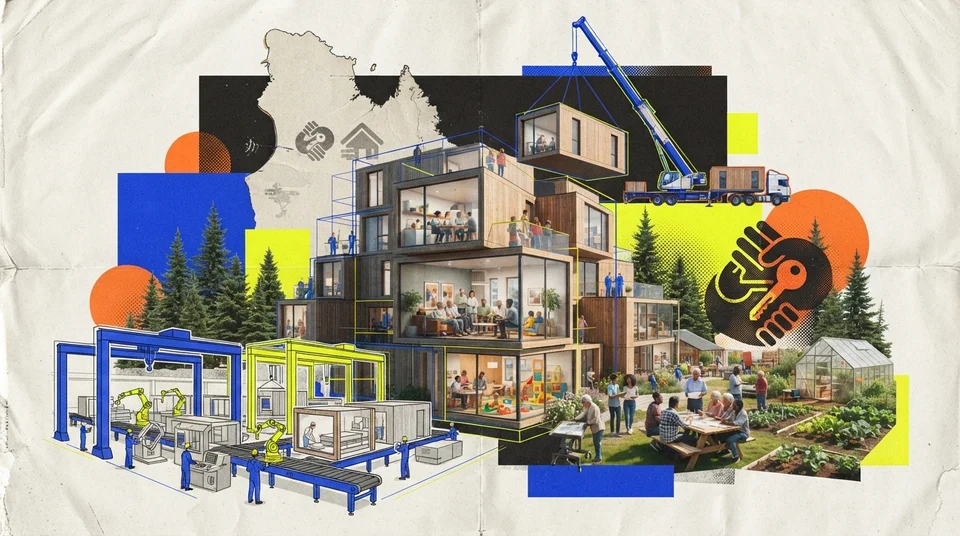
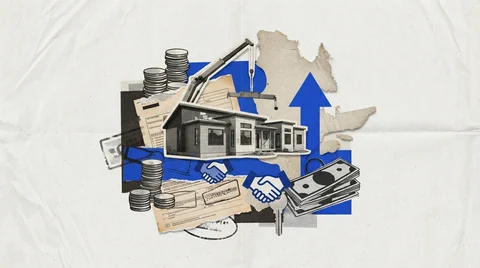
In short — Modular construction is a particularly good fit for housing co-operatives because it directly attacks their two heaviest constraints: cost per unit and time. By manufacturing units in a factory while the site is being prepared, a co-op can compress its timeline and keep tighter control over its budget — two survival conditions for a non-profit project.
Running a housing co-operative means carrying a full real estate project with the resources of a community organization: a volunteer board, a tight budget, and the obligation to deliver genuinely affordable rents over the long term. Every extra month of construction and every cost overrun comes directly out of future members' pockets. That is exactly where prefabrication becomes a strategic tool, not just a construction method.
Why modular speaks to co-operatives
A co-operative is looking for three things: predictable cost, durably low rents, and quality that avoids expensive repairs ten years down the road. Factory production serves all three.
- Controlled cost per unit. In a factory, units are built in series, with less material waste and a stable workforce. The price is negotiated across repeated units.
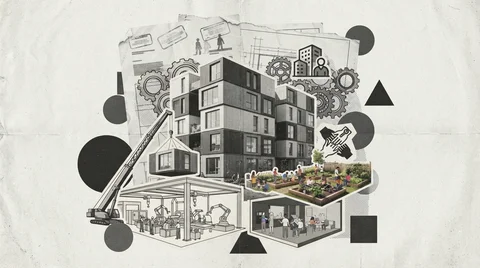
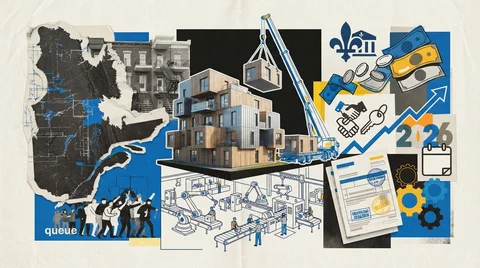
- Compressed timeline. Modules are manufactured while the foundation and site connections are installed — two processes running in parallel rather than in sequence.
- Consistent quality. Working under cover eliminates weather-related defects, a real issue in Quebec.
If the vocabulary (volumetric, prefabricated, 3D modules) is not yet familiar, start with our guide to what modular construction is.
Co-operative, non-profit, OMH: a few distinctions
These three models are often confused. A housing co-operative is collectively owned by its member-tenants, who govern it democratically. A housing non-profit is governed by a board for a specific clientele (seniors, single adults, families). A municipal housing office (OMH) falls under the public sector. All three can use modular construction and draw from the same programs; our guide to affordable and community housing covers the full picture.
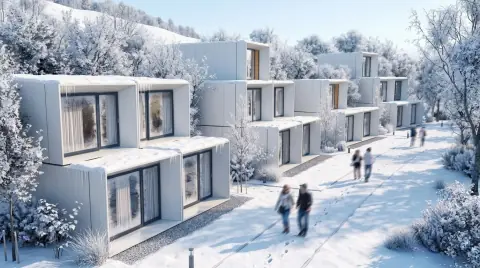
On the market, a manufacturer such as 8Module specializes in multi-unit housing of 6 to 24 units — the format that matches the majority of co-operative projects.
Disclosure — 8Module is a commercial client of Modulaire Québec; we receive compensation when we refer a lead. This content remains editorial and independent — 8Module neither commissioned nor reviewed it. Full disclosure.
Steps in a co-operative modular project
Modular changes the how, not the what. The main steps remain those of any community housing project:
| Step | What changes with modular |
|---|---|
| Group formation and incorporation | Unchanged |
| Site search and zoning | Confirm that factory-built construction is permitted in the zone |
| Financing package (SHQ, CMHC, municipality) | Disbursement schedule adapted to factory production timeline |
| Design | Engage the manufacturer early; aim for repeated units |
| Factory production | Begins while the site is being prepared |
| Foundation and site connections | Running in parallel with factory production |
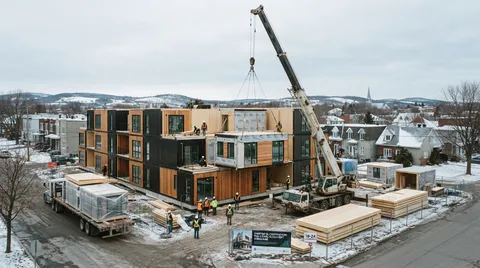
| Delivery, crane placement, finishing | Rapid assembly, then connections and inspection |
Accompaniment by a technical resource group (GRT) remains strongly recommended to navigate financing and regulatory compliance.
Financing: to verify, never to invent
Co-operatives rely on public programs whose names, amounts and conditions change regularly. In Quebec, the Société d'habitation du Québec (SHQ) and, at the federal level, CMHC are the main entry points. The Confédération québécoise des coopératives d'habitation (CQCH), the Réseau québécois des OSBL d'habitation (RQOH) and local GRTs point groups toward active programs. Consult our resources and references page for official sources.
Golden rule: never build a financing structure on a figure read online. Confirm every program and every amount directly at the source before committing.
What comes next for members
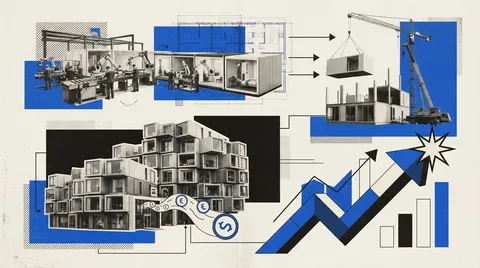
Once the building is delivered and occupied, a modular co-operative runs like any other residential building: maintenance, reserve fund, community life. For the financial logic of a multi-unit building — costs, returns, structure — see our guides on the modular multiplex and on rental building ROI.

8Module
Modular multi-residential buildings (6 to 24+ units) factory-built in Quebec.
Visit websiteCommercial partnership — we receive compensation. Disclosure
Frequently asked questions
Can a co-operative actually save money with modular?
Which organizations fund housing co-operatives in Quebec?
Does modular limit a co-op's architecture?
Sources
- Programmes d'aide à l'habitation communautaire et abordable — Société d'habitation du Québec (SHQ)
- Le mouvement des coopératives d'habitation — Confédération québécoise des coopératives d'habitation (CQCH)
- Programmes de financement du logement abordable — SCHL

Comments
A question or comment on this article? The comments section will be enabled soon.