Non-profit · 6 min
336 Prefab Housing Units Expected This Summer: Quebec's Factory Bet Gets Real
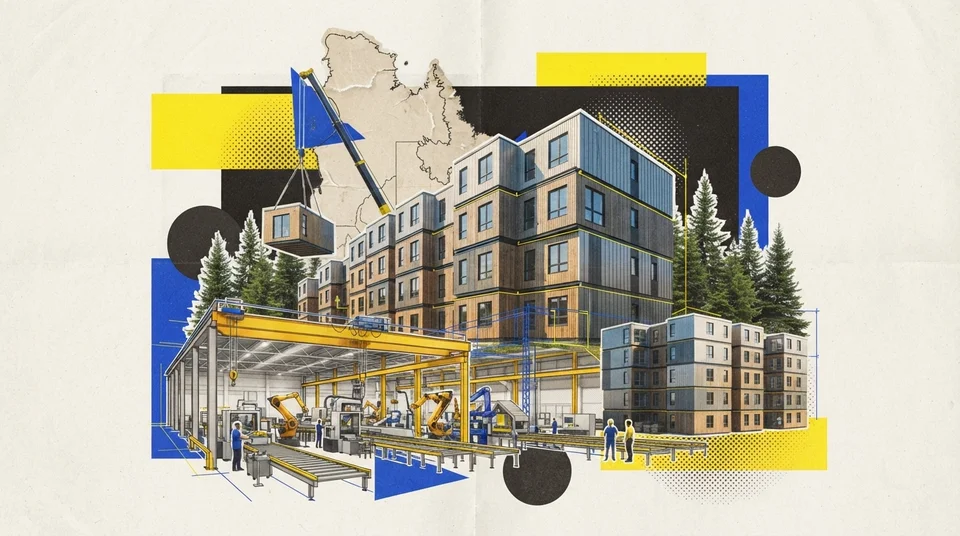
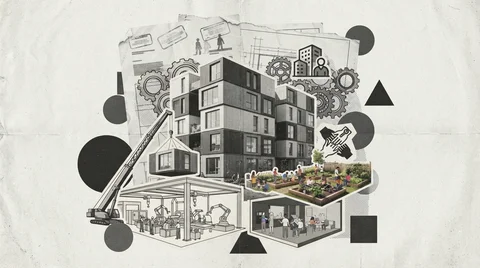
In short — Eleven projects, 336 housing units, all built in Quebec factories: the first project call of the PHAQ's highly prefabricated stream is targeting deliveries as early as this summer. From Lévis to Grande-Vallée by way of Coaticook, this is the moment of truth for Quebec's industrial bet on housing — and for the manufacturers, like Groupe RCM in Sainte-Marie, who are carrying it.
Summer 2026 is no longer a distant horizon in a news release: it is now. And it is precisely the deadline Quebec set for itself to deliver the first 336 units of its Initiative de multilogements hautement préfabriqués — eleven projects selected in August 2025, factory-built over the winter, to be assembled and occupied before the end of the warm season.
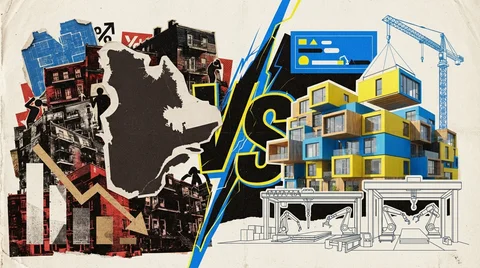
Early this year, Radio-Canada devoted a report to this "prefabricated modular housing bet". The word bet is well chosen: if tenants get their keys on time, Quebec will have shown that affordable housing can be produced at industrial scale. If they do not, the skeptics will have ammunition for a decade.
An initiative that became a permanent piece of the PHAQ
An administrative detail that is anything but: launched in August 2024 as a standalone initiative, the formula is now integrated as stream 3 of the Programme d'habitation abordable Québec (PHAQ). Translation: prefab is no longer a pilot project that a change of minister can erase. It is now a permanent channel of the province's main affordable housing program.
For a non-profit or a housing office, that changes the math: the financial structuring of a prefab project goes through the same doors as everything else. Who funds what, in what order, with which federal programs in support — our guide to funding affordable modular housing draws the full map.
From Lévis to Grande-Vallée: where the modules are landing
Among the eleven projects, the Radio-Canada report names a few that show the geographic scope of the bet: 48 units in Lévis, in Chaudière-Appalaches; and three projects entrusted to Groupe RCM with contractor Pomerleau — 24 units in L'Isle-aux-Allumettes, in the Outaouais, 24 in Grande-Vallée, in the Gaspésie–Îles-de-la-Madeleine, and 36 in Coaticook, in the Estrie.
Look at that list for two seconds. These are not towers in downtown Montréal: they are villages and small towns where no conventional developer mobilizes an eighteen-month job site for 24 doors. That is exactly the market gap prefab is stepping in to fill. The detailed map of the eleven projects, town by town, is in our article on Quebec's 500-prefab-unit bet.
Inside the Sainte-Marie factory
The report also puts a face on the bet: Groupe RCM (RCM Modulaire), a manufacturer based in Sainte-Marie, in the Beauce. Its general manager, Cédric Bolduc, answers in a single breath the objection heard at every family dinner: "We have to follow the same [Construction Code] as conventional construction, so it is not lower quality."
He is right on the regulatory substance — a factory module complies with the same code as the neighbour's bungalow — and the prejudice is stubborn all the same. We take it apart piece by piece, along with the others, in the myths of modular construction.
Architect Carlo Carbone, a professor at UQAM's École de design, points in the same report to the formula's real economic engine: repeatability. A standardized building, manufactured in series, crushes timelines and costs in a way no custom job site can match. That is the principle we put numbers on in our analysis of modular project timelines and scheduling.
What we will know by the end of summer
The first clue is already in: in Montréal, the Projet Acadie was put up in under 12 months, permits included. That leaves the other ten. If Grande-Vallée, L'Isle-aux-Allumettes, and Coaticook welcome their tenants this summer as planned, the proof will have landed where it matters most: far from the big cities, where the housing crisis is quietly strangling municipalities.
Would your organization, your co-op, or your municipality like to price out a similar project while the programs are open? We can prepare a quote together — and the guide to funding affordable modular housing shows where the money flows.

8Module
Modular multi-residential buildings (6 to 24+ units) factory-built in Quebec.
Visit websiteCommercial partnership — we receive compensation. Disclosure
Frequently asked questions
What are the 336 prefab housing units expected in summer 2026?
Does a prefab housing unit meet the same building code as traditional construction?
Does the prefabricated multi-unit initiative still exist?
Sources
- Le pari du logement modulaire préfabriqué — Radio-Canada Info

Comments
A question or comment on this article? The comments section will be enabled soon.