Non-profit · 6 min
Montréal Housing Starts: Rentals Crush Everything, and Factories Are Built for That
In short — CMHC's spring 2026 Housing Supply Report tells a story of reversal: about 25,200 housing starts in the Montréal area in 2025 — well above the ten-year average — with rentals making up more than 80% of them, an all-time high. Condos hit a floor. The market is finally building the right kind of building; what remains is building it fast enough, and that is where the factory comes in.
For years, the knock on Montréal was that it built the wrong thing: investor condo towers while tenants squeezed. CMHC's spring 2026 report, published in March, documents the complete inversion of that logic — and it deserves a close read from anyone following the 2026 state of the housing crisis.
The numbers behind the flip
Three data points sum up Montréal's 2025, according to CMHC:
- 25,223 housing starts in total, against an average of 19,979 a year over the 2016-2025 decade. The overall pace is up.
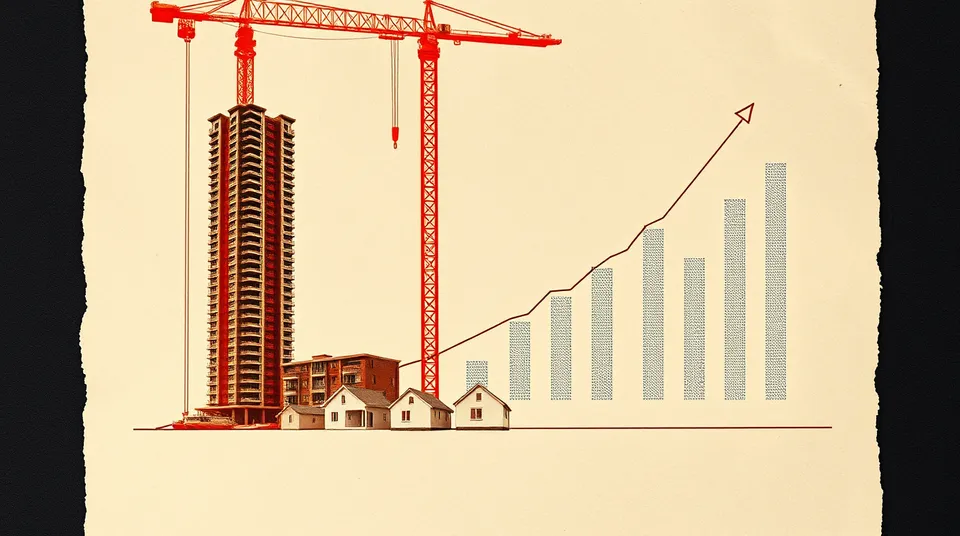
- An all-time rental high: 23,089 rental starts, up from 13,813 in 2024 — more than 80% of everything that broke ground in the region.
- 2,027 condo starts, a historic floor. Investors walked away; economic uncertainty did the rest.
The report also notes that "missing middle" housing — duplexes up to small low-rise buildings — accounted for about a third of starts: conversions on the island, where land is scarce, and growing low-rise construction on the North and South shores. The building format Quebec was missing is sprouting again, the case we made in our feature on the modular multiplex.
Building more, yes — but fast enough?
That is the good news. The less good: even at 25,000 units a year in the metropolis, the gap with actual need remains vast — CMHC estimated in 2023 that Quebec would be short about 860,000 homes by 2030, one of the five numbers that define the crisis. And the rental housing that now dominates starts is precisely the most repetitive, most standardizable building type — the one factory construction delivers fastest.
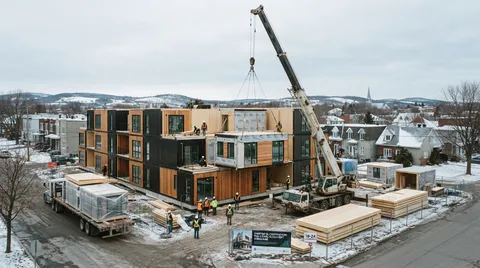
That is the argument we lay out in modular construction and the housing crisis, and it is already at work at the other end of the province: the 478-unit prefab contract in eastern Quebec orders in one stroke what dozens of conventional job sites would have taken years to deliver. When more than 80% of construction demand is multi-unit rental, every gain in factory speed compounds.
The test of the coming years is already written: the 2026-2028 affordable housing pipeline has to turn these record starts into recurring deliveries. Does your organization or municipality want to price a prefab rental project while the wind blows this way? We can prepare a quote request together.

8Module
Modular multi-residential buildings (6 to 24+ units) factory-built in Quebec.
Visit websiteCommercial partnership — we receive compensation. Disclosure





Comments
A question or comment on this article? The comments section will be enabled soon.